
KnifeScope is reader-supported. When you buy through links on this page, we may earn a small commission at no extra cost to you.
Reading about knife skills only gets you so far. What actually builds confidence is short, regular practice with real food.
This plan gives you one focus per day for a week, about 15 minutes each, using cheap vegetables you would cook anyway. By day seven you will hold a knife properly, cut evenly and feel much safer at the board.
Why knife skills for beginners matter
Good knife skills for beginners speed up prep. They also make food look better and cut waste. Safer handling prevents common kitchen injuries.
Learning basic knife skills for beginners builds a habit. That habit saves time and money. It also makes cooking more enjoyable and less stressful.
PAA-style questions:
- What are the first moves to learn for knife skills for beginners? Learn the pinch grip, guide hand, and the rocking motion.
- How long to get comfortable with knife skills for beginners? Short daily practice of 10–15 minutes helps in a few weeks.

Essential knives and tools for beginners
Choose a few Reliable tools For knife skills for beginners.
- Chef’s knife: a 7–8 inch chef’s knife fits most hands and tasks.
- Paring knife: good for peeling and small trims.
- Serrated knife: for bread and soft-skinned items.
- Cutting board: solid wood or plastic that doesn’t slip.
- Honing rod and sharpening stone: keep edges true and sharp.
- Safety tools: finger guards or cut-resistant gloves if desired.
Simple gear helps you focus on the technique. You do not need a giant drawer of gadgets to learn knife skills for beginners.
How to hold a knife: grips that work
A reliable grip is the foundation of knife skills for beginners.
- Pinch grip: pinch the blade just in front of the bolster with thumb and index finger. Wrap the other three fingers around the handle.
- Handle grip (for small knives): hold the handle like you would hold a pen for detail work.
- Wrist position: keep the wrist neutral. Move the arm and shoulder for long cuts.
Pinch grip gives control and balance. Practicing this grip makes many cuts safer and cleaner.

How to position your guide (non-knife) hand
Your non-knife hand shapes food and protects fingers. Use the claw grip.
- Curl fingertips inward.
- Let knuckles act as a guide for the knife flat.
- Move your hand backward as you cut.
The claw reduces slips and standardizes slice width. This is one of the most repeated lessons in knife skills for beginners.
Basic cuts and how to do them
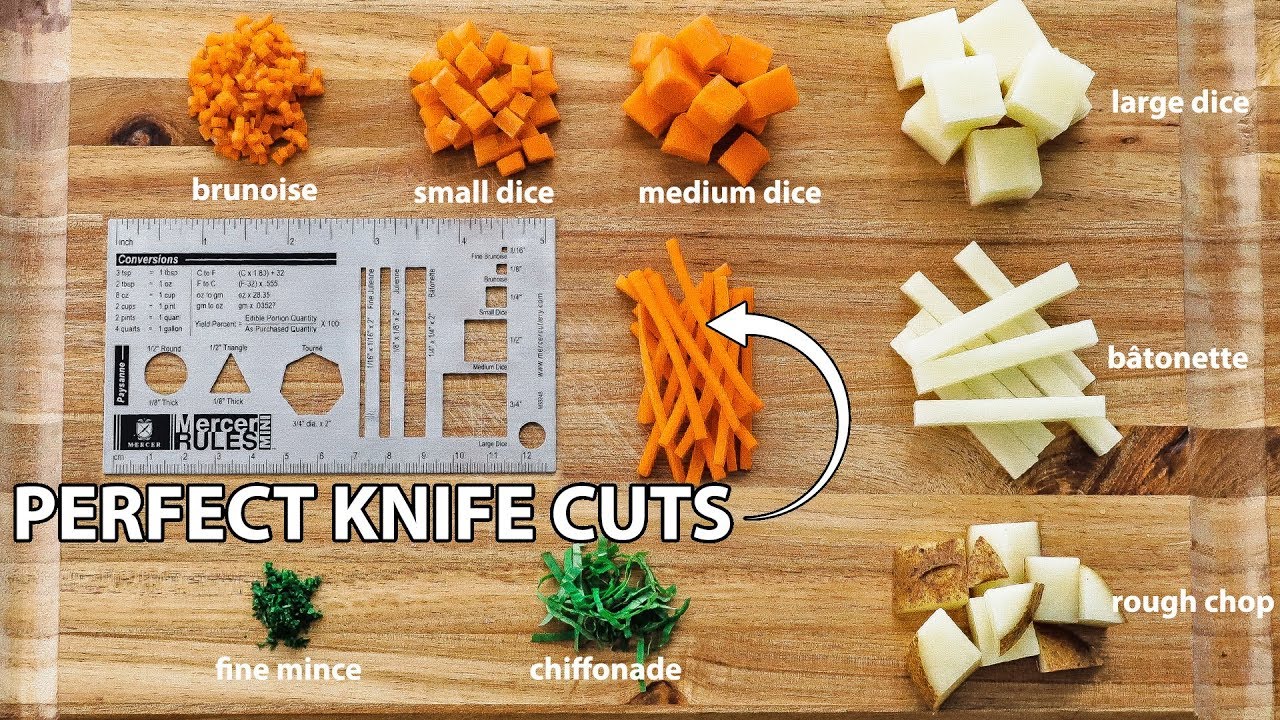
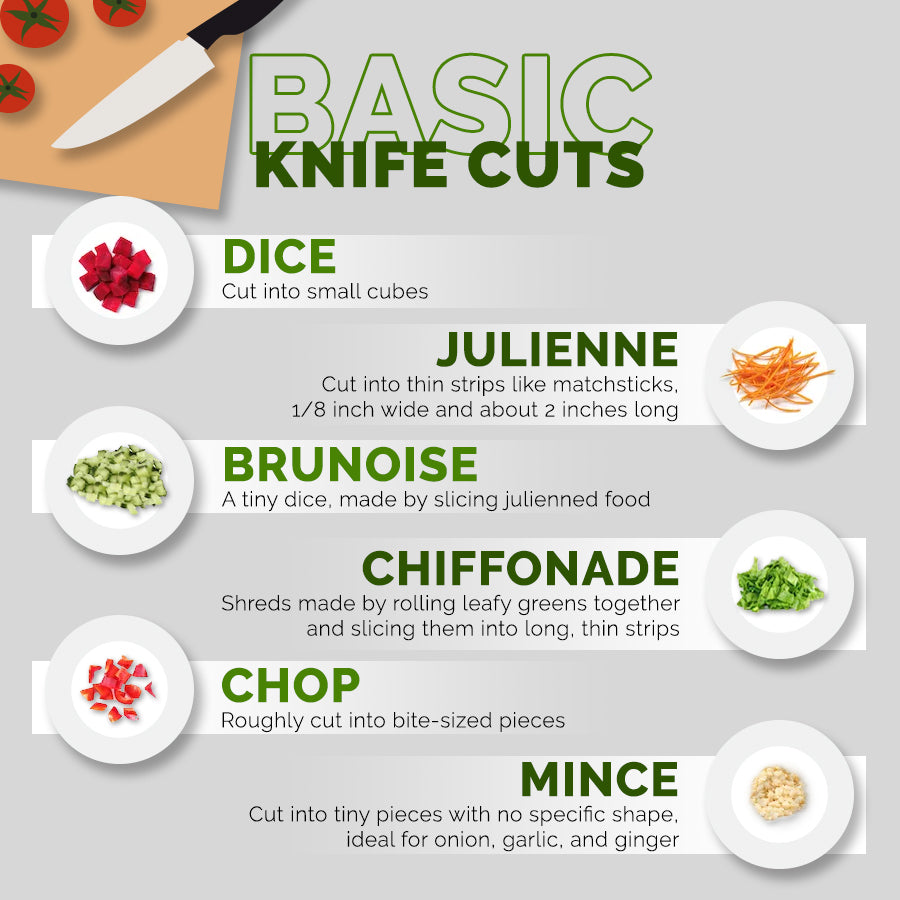
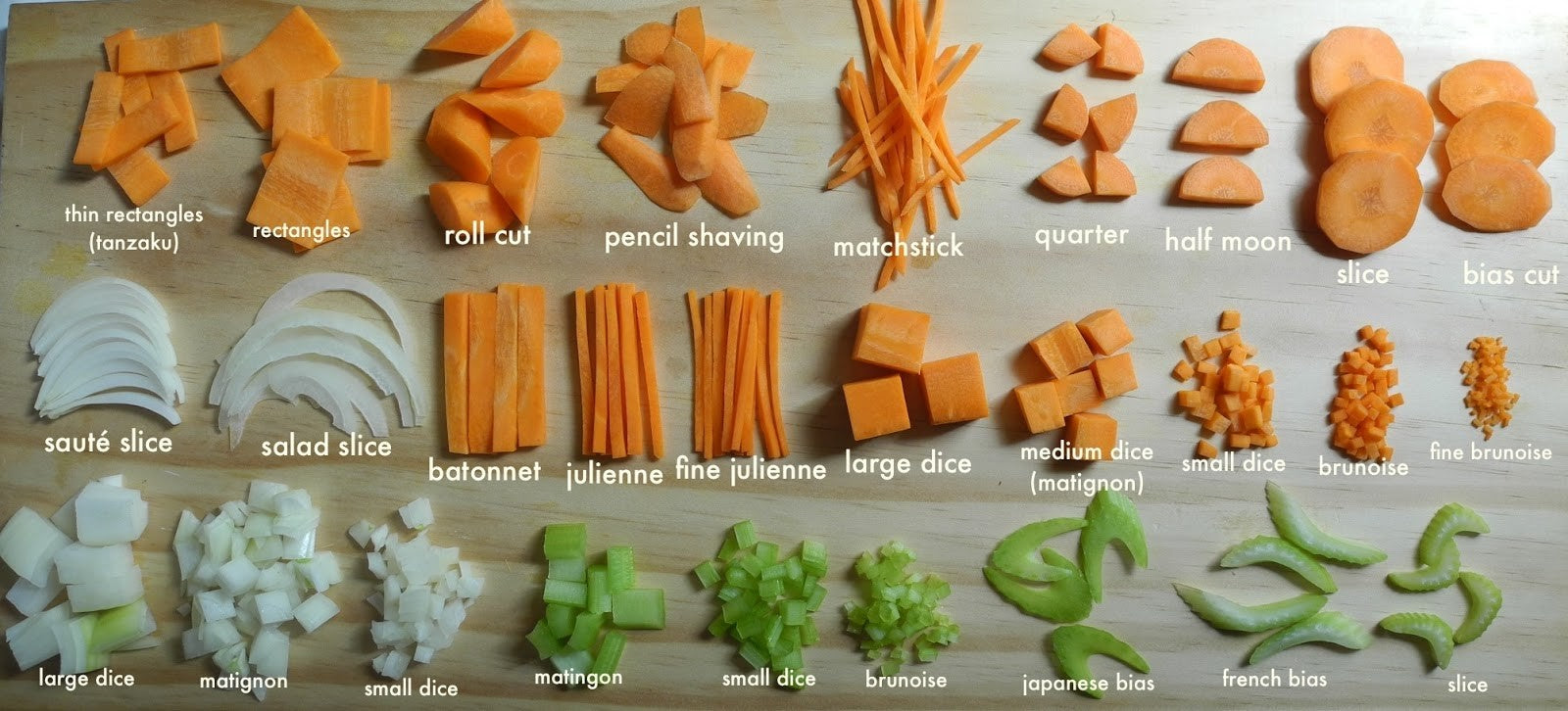
Master the core cuts used in most recipes. Practice each cut slowly until it feels natural.
- Slice
- Hold item steady with claw hand.
- Draw the knife from tip to heel in a smooth motion.
- Chop
- Use a down-and-forward motion.
- Keep knife tip anchored for small dices if needed.
- Dice
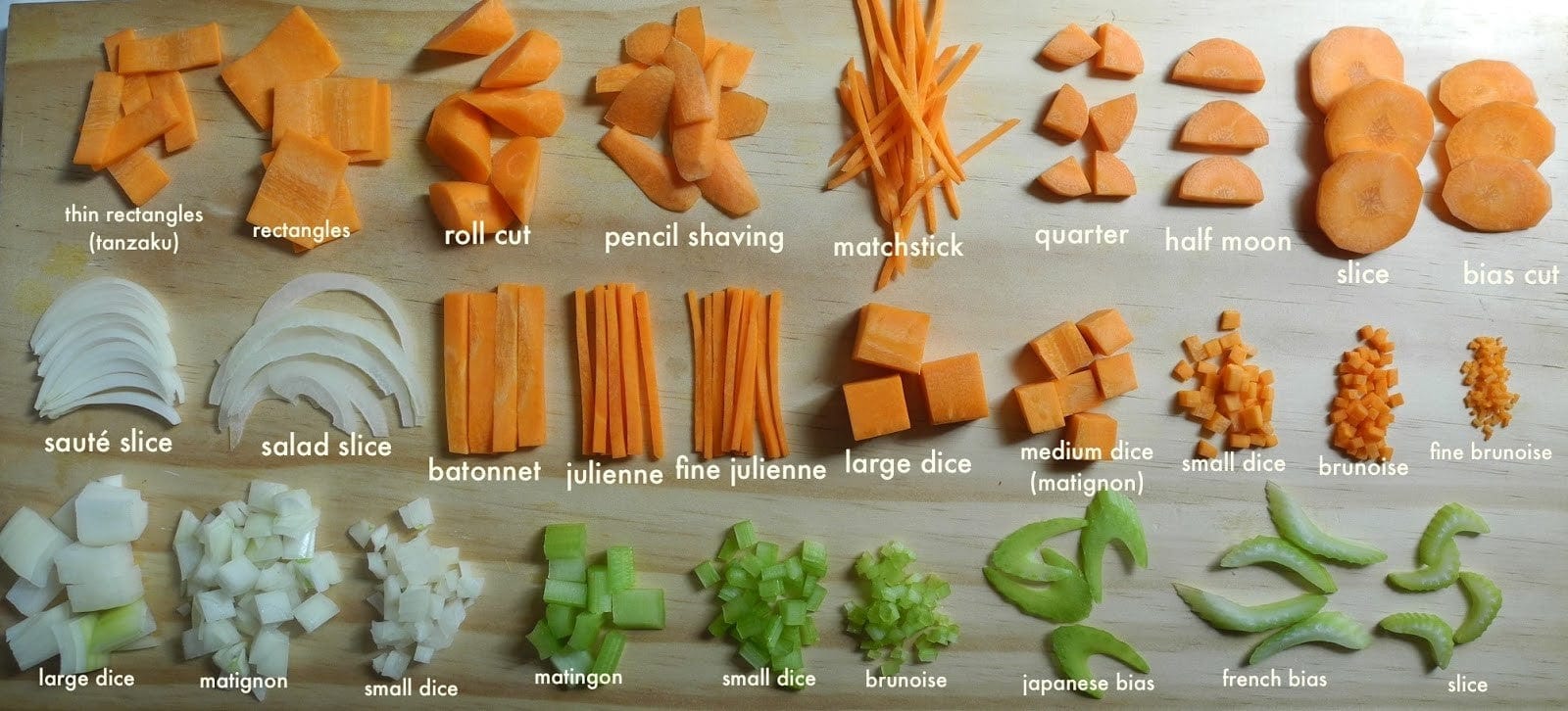
- Slice into even slabs, then sticks, then cubes.
- Aim for consistent size for even cooking.
- Julienne
- Cut thin sticks about 1/8 inch wide.
- Stack and slice uniformly.
- Mince
- Rock the knife back and forth over herbs.
- Use a guiding hand to keep items in place.
Practice these cuts with carrots, onions, and herbs. Repetition builds speed while keeping accuracy.
 Techniques and accident prevention”
style=”max-width: 100%; height: auto; border: 2px solid black; border-radius: 10px; display: block; margin: 0 auto;”
loading=”lazy”
/>
Safe cutting Techniques and accident prevention
Safety is key for knife skills for beginners. Follow these rules.
- Keep knives sharp. Dull blades slip and cause accidents.
- Cut away from your body. Keep fingers behind the blade.
- Stabilize your board with a damp towel under it.
- Never catch a falling knife. Step back and let it fall.
- Store knives in a block or magnetic strip to avoid loose blades.
Sharp tools are safer. That sounds odd but true. I learned that early in my kitchen work.
Knife care: sharpening and maintenance
Good care extends blade life and builds trust in your tools.
- Hone before every use to realign the edge.
- Sharpen on a stone or with a guided sharpener when honing no longer helps.
- Wash knives by hand and dry immediately.
- Avoid dishwasher and hard surfaces that dull edges.
A well-maintained knife improves every lesson in knife skills for beginners.

Practice drills and simple exercises
Short, focused drills accelerate learning. Try these:
- Onion slices: 5 minutes of uniform slices.
- Julienne carrots: repeat until sticks are consistent.
- Herb mincing: chop 50g of parsley finely.
- Speed drill: time yourself on 10 tomato slices without rushing.
Start slow. Speed comes from accuracy. I used these drills when coaching new cooks and saw dramatic improvement in weeks.

Common mistakes and how to fix them
Beginners often repeat the same errors. Fixes are simple.
- Mistake: Using a dull knife. Fix: Learn sharpening basics.
- Mistake: Flat wrist or tight grip. Fix: Relax grip and use arm motion.
- Mistake: Uneven cuts. Fix: slow down, Use guide hand, then increase speed.
- Mistake: Unsafe board setup. Fix: add damp towel and maintain clear workspace.
Accept mistakes as learning steps. Practical adjustments help you feel confident faster.
Recipes to practice knife skills for beginners
Practice with simple recipes to apply skills.
- Sautéed vegetables: slice carrots, peppers, onions to similar size and cook evenly.
- Salsa verde: mince herbs and garlic finely for flavor release.
- Stir-fry: julienne vegetables quickly to maintain crunch.
- Salad mix: dice cucumbers and tomatoes to uniform cubes for a neat presentation.
Working with real recipes makes practice relevant and fun.
Personal lessons and tips from experience
I taught dozens of beginners and made my own mistakes. Here are lessons I still use.
- Start with a good knife that fits your hand. Comfort matters.
- Practice daily for short bursts. Ten minutes beats one long session.
- Focus on control before speed. Fast but sloppy cuts are wasted practice.
- Record a short video of your cutting. Seeing your hands helps correct posture.
I once tried teaching a group with only dull knives. Progress stalled fast. Upgrading edges changed everything.
When to seek formal training
Consider a class if you want faster progress or professional skills.
- Hands-on feedback speeds correction of bad habits.
- Formal classes often teach Knife maintenance and advanced cuts.
- Mentors can provide tailored drills and motivation.
A few sessions with a qualified teacher can shorten your learning curve significantly.
The 7-day plan
- Day 1, grip and stance: Practise the pinch grip and claw grip on a cucumber. Go slowly.
- Day 2, slicing: Even rounds of carrot and zucchini. Aim for the same thickness every time.
- Day 3, onions: Halve, peel and slice an onion. Then try a basic dice.
- Day 4, dice: Square off a potato and cut planks, sticks, then cubes.
- Day 5, mince: Garlic and parsley. Rock gently and gather often.
- Day 6, herbs: Chiffonade basil or mint.
- Day 7, put it together: Make a simple stir-fry or soup using everything you practised.
Frequently Asked Questions of knife skills for beginners
What knife should a beginner buy first?
Start with a 7–8 inch chef’s knife and a small paring knife. These cover most kitchen tasks and are good for learning basic techniques.
How often should I sharpen my knife?
Hone before each use and sharpen on a stone when honing fails to restore the edge. For home cooks, sharpening a few times a year is common.
Are cut-resistant gloves worth it for beginners?
They can boost confidence, especially when learning. However, good technique and a sharp knife are the best long-term safety measures.
How long does it take to learn basic knife skills?
With regular short practice, most people feel comfortable in a few weeks. Continued practice builds speed and consistency.
Can I teach myself knife skills at home?
Yes. Use short drills, follow safety rules, and practice with real recipes. Recording yourself or taking one class helps correct early mistakes.
Conclusion
Fifteen minutes a day for a week is enough to change how you cook. Focus on grip, even cuts and a sharp knife, and speed will come naturally afterwards.
Maliha Khatun has spent 5 years hands-on testing Japanese knives for everyday home cooks. She has evaluated over 60 blades across nakiri, santoku, gyuto, and petty categories — scoring each on edge retention, steel quality, handle comfort, and value for money. She writes to help home cooks buy the right knife without the guesswork.
Expertise:Japanese Knives • Vegetable Knives • Product Reviews • Kitchen Efficiency • Knife Care