
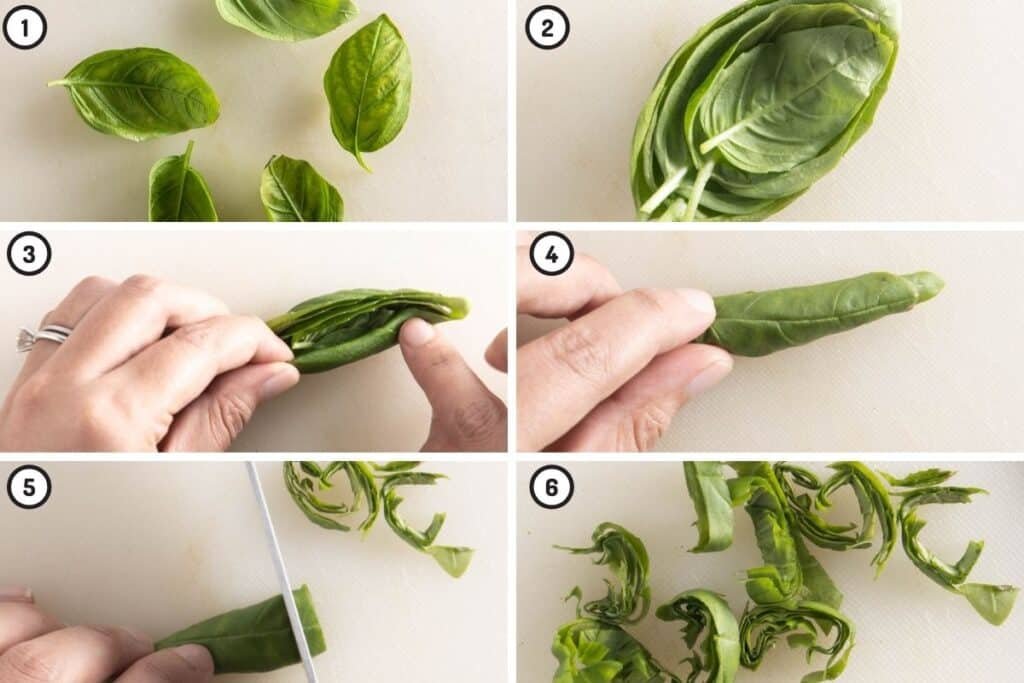
Chiffonade is just a French word for thin ribbons of leafy herbs or greens. It is the technique behind the neat strips of basil on a pizza or the fine mint scattered over a salad.
It takes about 30 seconds once you know the trick: stack, roll, slice. The only real secret is a sharp knife, because a dull one crushes the leaves and turns basil black within minutes.
What is the chiffonade cutting technique?
The chiffonade cutting technique is a method for cutting leafy greens and herbs into long, thin ribbons. The word chiffonade comes from French and means "little rags" or "shreds," which describes the ribbon-like result. This technique preserves flavor and releases aroma because it cuts leaves cleanly across their veins. Use the chiffonade cutting technique when you want neat, even strips for garnish, salad, or layering in a dish.
Chiffonade works best on flat, tender leaves like basil, spinach, and Swiss chard. It is not suited to woody stems or thick-veined leaves unless you remove the stems first. With practice, the chiffonade cutting technique becomes fast, safe, and visually striking.

Tools and preparation for a perfect chiffonade
Choose simple tools and good prep to make the chiffonade cutting technique easier.
- A sharp chef’S knife with a thin blade helps you slice cleanly.
- A paring knife works for small bunches or delicate herbs.
- A cutting board with a stable surface prevents slips.
- Clean, dry leaves help the chiffonade hold shape and not clump.
- Remove thick stems before you chiffonade to get even ribbons.
- Stack leaves in neat piles to keep the cut consistent.
Set your workspace low and close to the board. Dry the leaves gently with a towel or spinner; wet leaves slip and tear. These small steps make the chiffonade cutting technique safer and neater.
Step-by-step chiffonade cutting technique
Follow these steps for an even, elegant chiffonade.
- Wash leaves and dry them well so they do not slip.
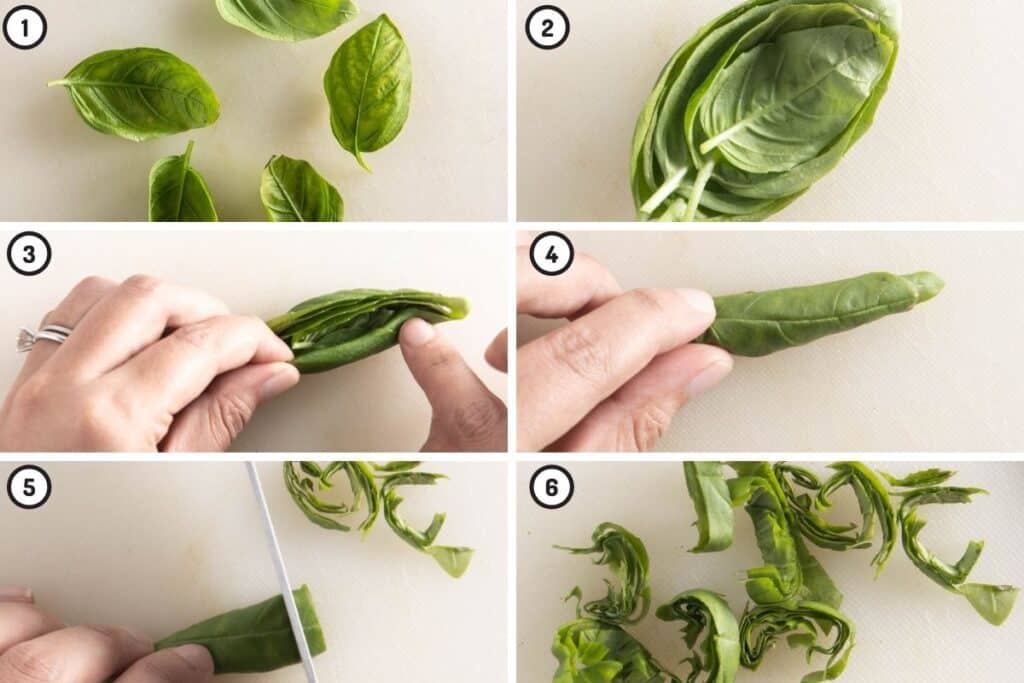
- Remove tough stems and stack leaves flat on top of each other.
- Roll the stack tightly from one end to the other into a cylinder.
- Hold the roll with fingertips tucked and knuckles forward.
- Use a smooth rocking motion with a sharp knife to slice thin strips.
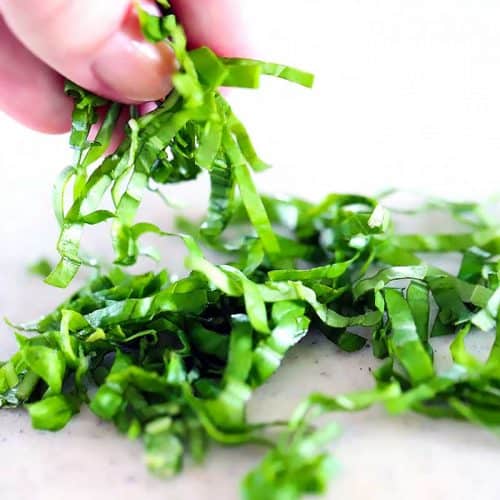
- Unfurl the ribbons and fluff them gently with your fingers.
Tips for control: keep the knife tip on the board and use the knife heel to rock. Aim for slices about 1/8 to 1/4 inch wide for a classic chiffonade look. Practice with basil first; its texture and size make it ideal for mastering the chiffonade cutting technique.
Quick questions (PAA-style)
How tight should I roll leaves before chiffonade?
Roll leaves fairly tight but not crushed. A neat, snug roll gives even ribbons and makes slicing easier.
Can I chiffonade wet herbs?
Avoid chiffonade on wet herbs because they slip and bruise. Dry herbs produce cleaner ribbons and better texture.
Does chiffonade bruise herbs?
If you use a dull knife or press too hard, you can bruise leaves. A sharp knife and light pressure reduce bruising.

Best greens and herbs for chiffonade
These leaves respond best to the chiffonade cutting technique.
- Basil, perfect for raw garnish and finishing dishes.
- Mint, bright ribbons for salads and drinks.
- Spinach, young leaves work well in salads or sandwiches.
- Swiss chard, remove stems, then chiffonade the leaves for sautés.
- Sorrel and arugula, for mild, ribboned greens in soups or plates.
- Kale, use tender baby kale; remove ribs for best results.
Avoid thick, woody herbs like rosemary or thyme; use a fine mince for those. The chiffonade cutting technique shines with tender, pliable leaves.
Uses, benefits, and limitations of the chiffonade cutting technique
Why use the chiffonade cutting technique and where does it fall short?
Benefits
- Visual appeal, ribbons look elegant as a finishing touch.
- Flavor release, clean cuts release aromatic oils without crushing.
- Texture, thin strips add lightness and mouthfeel.
- Speed, quick method for prepping large amounts of leaves.
Common uses
- Garnishing pasta, soups, and salads.
- Folding into omelets and soft cheeses.
- Layering on pizzas or flatbreads after baking.
- Mixing into vinaigrettes or herb butter.
Limitations
- Not good for woody or small herbs that need mincing.
- Wet leaves tear and clump, which spoils presentation.
- Thick stems must be removed; chiffonade alone won’t work.
Use the chiffonade cutting technique when appearance and flavor release matter. Choose the right leaves and dry them well to avoid limits.
Common mistakes, safety, and how to avoid them
Learn from common errors to speed up progress with the chiffonade cutting technique.
- Mistake: Using a dull knife.
Use a sharp knife to slice cleanly and avoid bruising leaves. - Mistake: Rolling too loosely.
Roll tightly enough to keep the stack stable for even cuts. - Mistake: Holding fingers in the blade path.
Tuck fingertips and use knuckles as A guide to protect your hands. - Mistake: Chiffonading wet leaves.
Dry leaves first to prevent tearing and clumps. - Mistake: Trying to chiffonade unsuitable herbs.
Remove stems and choose tender leaves for best results.
Safety quick tips
- Keep the knife sharp and your board clean.
- Cut slowly until you are comfortable with the rhythm.
- Practice control before speed.
These corrections and tips will keep the chiffonade cutting technique safe and tidy.
Advanced tips, variations, and recipe ideas
Once You master the basic chiffonade cutting technique, try variations and uses that raise your cooking.
Advanced tips
- Double-chiffonade: chiffonade, then cross-Slice for finer threads used in pestos.
- Stacked layering: stack different herbs to create mixed-color ribbons.
- Temperature trick: chill leaves briefly to firm them for ultra-thin slices.
- Stem chiffonade: blanch thick stems briefly, cool, then slice to mimic ribbons.
Recipe ideas
- Fresh basil chiffonade over hot pasta just before serving.
- Mint chiffonade in fruit salads and cocktails.
- Spinach chiffonade folded into ricotta for a light filling.
- Mixed herb chiffonade as a bright garnish on roasted fish.
Personal note from my kitchen
I once tried to chiffonade a wet bunch of basil for a dinner rush and ended up with bruised, clumpy leaves. After that night, I always dry and chill delicate herbs for a few minutes. That small habit improved my chiffonade results and saved time during service.
The 3-step method
- Stack. Pick leaves of similar size, remove thick stems and stack 6 to 10 leaves with the shiny side down.
- Roll. Roll the stack tightly lengthwise into a cigar shape.
- Slice. Hold the roll with a claw grip and slice across it with a smooth forward or pull stroke, 1 to 2 mm apart. Fluff the ribbons apart with your fingers.
For large greens like kale or chard, remove the rib, roll a few leaves at a time and cut slightly wider ribbons.
Common Mistakes and Quick Fixes
Dull knives bruise herbs and turn basil black. Use a sharp blade and cut just before serving. Wet leaves slip and tear, so dry them well first. If your ribbons come out uneven, you are probably not rolling the stack tightly enough.
Stack the leaves, roll them like a cigar, then slice across the roll with a smooth push cut. A light, steady guiding hand matters more than speed. Our guide to finger placement shows the safe hand position.
Frequently Asked Questions of chiffonade cutting technique
What is the chiffonade cutting technique best used for?
The chiffonade cutting technique is best for creating thin ribbons of tender leaves for garnish and mixing into dishes. It preserves aroma and gives a refined look.
Can I chiffonade rosemary or thyme?
No, rosemary and thyme are too woody for the chiffonade cutting technique; these herbs are better minced finely. Use a mortar and pestle or a sharp knife for small leaves.
How do I keep chiffonade ribbons from clumping?
Dry leaves thoroughly and slice with a sharp knife. Toss gently with a little oil or flour to separate ribbons if needed.
Is chiffonade the same as mincing?
No, the chiffonade cutting technique produces long thin strips, while mincing creates small, fine pieces. Each method suits different uses.
Can I chiffonade baby leaves and microgreens?
Yes, many baby leaves and microgreens work well with the chiffonade cutting technique if they are large enough to stack. Handle them gently to avoid bruising.
How thin should chiffonade slices be?
Aim for about 1/8 to 1/4 inch strips for classic chiffonade. Thinner slices are possible with practice and a very sharp blade.
Conclusion
Chiffonade is one of the easiest knife skills to learn and one of the most useful. Stack, roll, slice with a sharp blade, and cut basil just before serving to keep it green.
Maliha Khatun has spent 5 years hands-on testing Japanese knives for everyday home cooks. She has evaluated over 60 blades across nakiri, santoku, gyuto, and petty categories — scoring each on edge retention, steel quality, handle comfort, and value for money. She writes to help home cooks buy the right knife without the guesswork.
Expertise:Japanese Knives • Vegetable Knives • Product Reviews • Kitchen Efficiency • Knife Care